
Founder-led brand mistakes can make a good business look smaller, weaker, or less serious than it really is.
That is the frustrating part.
A founder can have years of experience, strong taste, real clients, sharp thinking, and a valuable offer. But if the brand feels casual, vague, or insecure online, people may not give the business enough trust to understand what is actually there.
This happens often with consultants, experts, studios, personal brands, service providers, and small business owners.
They are too experienced to look casual, but too honest to pretend they are a massive agency. So they get stuck in an awkward middle: not clearly premium, not clearly personal, not clearly strategic, and not clearly positioned.
The website starts feeling like a portfolio. The offer sounds like availability. The proof is scattered. The founder is present, but not framed as a strength. The business is real, but the brand makes it feel smaller than the work behind it.
That is avoidable.
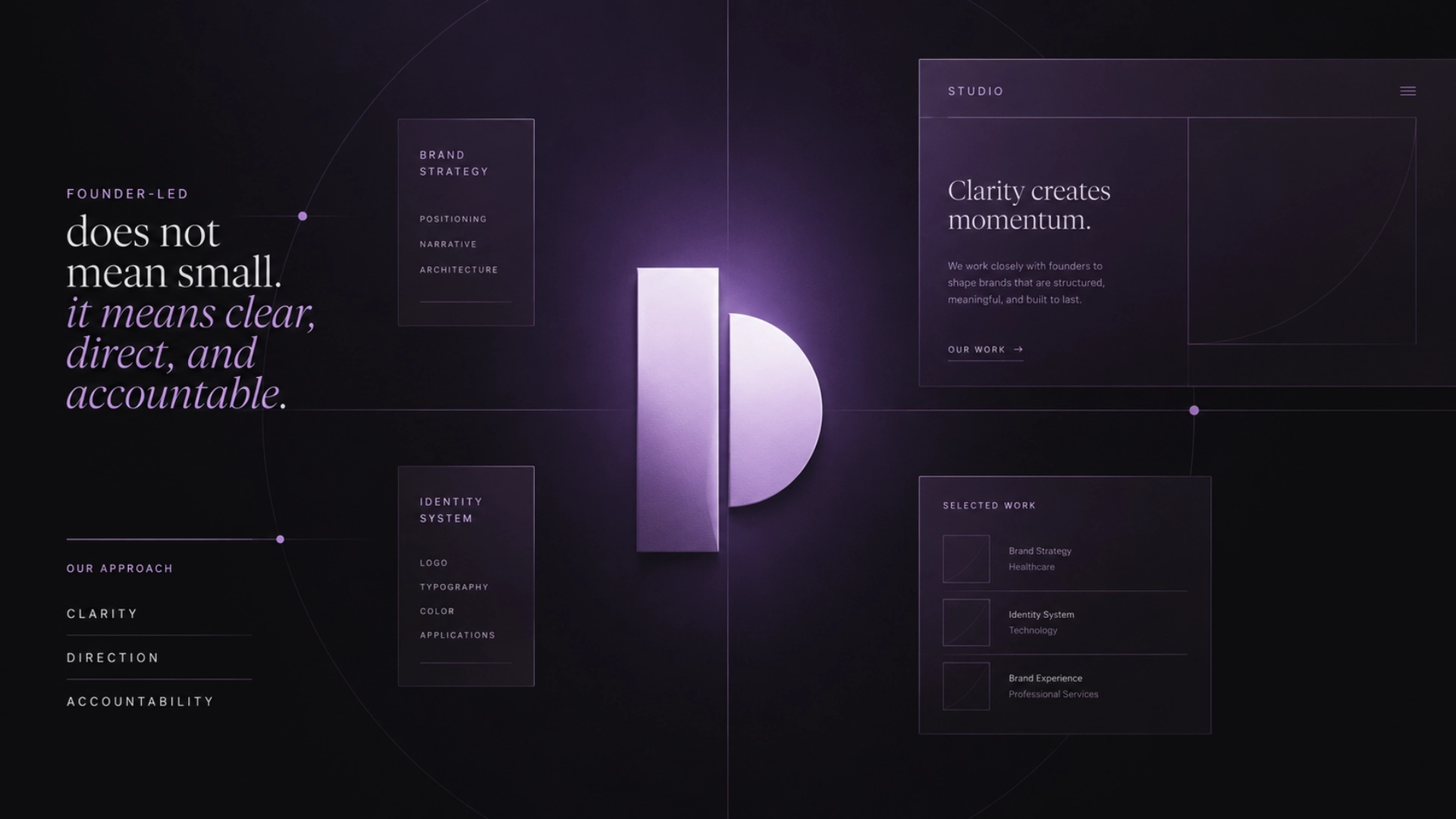
Founder-led does not mean small. It means the person responsible for the thinking is visible. When the brand communicates that properly, founder-led can become a serious advantage.
Founder-led does not mean small. It means the person responsible for the thinking is visible.
The gap behind founder-led brand mistakes
A lot of founder-led businesses have a perception gap.
The work is stronger than the way the business appears online.
The founder may be experienced, but the website feels too light. The offer may be valuable, but the copy explains it too casually. The process may be thoughtful, but the brand does not show enough structure. The clients may trust the work, but the proof does not make that trust visible to new visitors.
This is closely connected to brand perception mistakes, because people often judge the business before they understand the depth behind it.
That judgement can be harsh, but it is real.
If the brand looks unclear, people assume the work may be unclear. If the website looks casual, people assume the service may be casual. If the founder hides behind vague agency language, people may sense the gap. If the proof is weak, people may treat the offer as risky.
None of this means the founder lacks skill. It means the brand is not carrying the value properly.
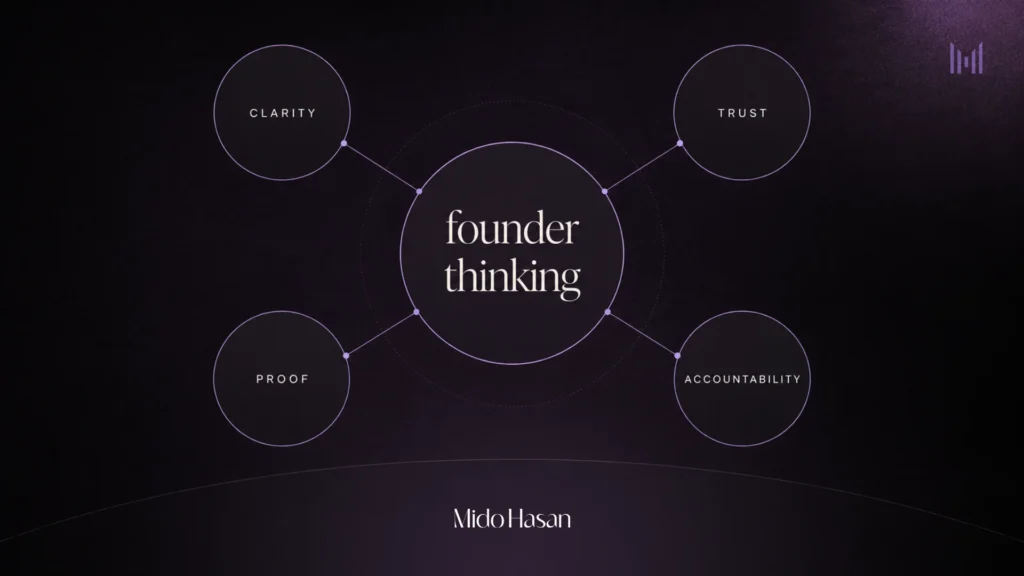
A founder-led brand should make three things easier to trust:
- The founder’s thinking.
- The quality of the work.
- The seriousness of the business.
When those three things are clear, the business can feel focused and premium without pretending to be bigger than it is.
Mistake 1. The brand feels like a personal portfolio
A personal portfolio shows what someone can do.
A founder-led brand explains why the work matters.
That difference is not small.
Many founder-led businesses accidentally stay in portfolio mode for too long. The website shows projects, services, a short bio, and a contact form. Everything technically exists, but the business does not feel positioned. It feels like the founder is available for work rather than leading a serious offer.
That creates the wrong buying behavior.
People ask for quick prices. They compare the founder with cheaper freelancers. They skip the strategic conversation and ask only about execution. They treat the work like a task instead of a business decision.
And honestly, why would they not?
If the brand does not create a serious frame, people create their own. Usually, a cheaper one.
A founder-led brand needs more than “here is my work.” It needs to show what the founder believes, what problems they understand, what standards guide the work, and what kind of value the client should expect.
The founder does not need to become loud. But the thinking cannot be invisible.
Mistake 2. The founder hides behind fake agency language
The opposite mistake is pretending to be bigger than you are.
This usually sounds like vague “we” language, generic agency positioning, broad service lists, fake team energy, and polished words that do not reveal who is actually responsible for the work.
The founder thinks this makes the business look safer.
It usually does the opposite.
People do not distrust founder-led businesses because they are founder-led. They distrust them when the brand feels unclear, inconsistent, amateur, or fake.
A fake scale is easy to smell.
A founder-led business does not need to act like a global agency to be taken seriously. It needs clear positioning, strong proof, a serious website, and a visible source of judgment.
This is also why the new chapter for Mido Hasan matters. The point was not to look like a bigger agency. The point was to make the studio more direct, more mature, and more accountable around the person actually leading the thinking.
That is a stronger position. Not a fake scale.
Real clarity.
Mistake 3. The founder is visible, but not useful
Some founder-led brands show the founder, but in the wrong way.
There is a photo. There is a short bio. Maybe there is a timeline, a few personal details, or a sentence about passion.
Fine. But visibility alone does not build trust.
The founder should not only appear as a face. The founder should help explain why the business is worth trusting.
That means the website should make the founder’s role clear:
- Who is leading the thinking?
- What experience shapes the work?
- What standards guide the decisions?
- What kind of clients or problems does the founder understand?
- Why should someone trust this person’s judgment?
People often choose founder-led services because they want direct access to senior thinking. They do not want to be passed through five layers of account managers. They want clarity, accountability, and someone who actually cares about the outcome.
That is the advantage.
But if the founder’s thinking is hidden, the advantage disappears.
A good founder-led brand does not turn the business into a personality show. It simply makes the person behind the work useful to the trust-building process.
Mistake 4. The positioning is too broad
Broad positioning feels safe to the founder and weak to the buyer.
That is the problem.
When a founder-led business tries to speak to everyone, the message becomes soft. It says things like “helping businesses grow online,” “creative solutions for modern brands,” or “design services for ambitious companies.”
Those lines are not evil. They are just tired. They could belong to almost anyone.
Specific positioning creates confidence. It tells people who the work is for, what problem is being solved, what the founder understands, and why the approach is relevant.
A founder-led brand does not need to look huge to feel serious. It needs to look focused.
Focus creates authority.
This is where many smaller businesses lose trust. They believe narrowing the message will make the business feel smaller. In reality, the opposite is often true. A focused brand feels more mature because it shows the founder has made decisions.
Broad brands feel unsure.
Focused brands feel led.
Mistake 5. The website does not build enough trust
A founder-led website has a harder job than a basic portfolio.
It needs to explain the offer, show the founder’s thinking, build trust, position the work properly, filter the wrong people, and guide serious buyers toward the next step.
That is a lot.
This is why website trust mistakes matter so much for founder-led businesses. A weak website not only makes the business look less polished. It makes the founder’s judgment feel less clear.
The website should answer the silent questions a serious buyer already has:
- Is this for me?
- Does this person understand my problem?
- Can I trust their judgment?
- Is the work valuable enough?
- What makes this different from cheaper options?
- What happens if I enquire?
If the website does not answer those questions, the founder has to do too much convincing later.
A good website prepares the conversation before it happens.
It should not just display the business. It should reduce doubt.
Mistake 6. The proof only shows the surface
Pretty screenshots are not enough.
This is a hard truth for designers, studios, consultants, and experts. Showing the final work matters, but if the proof only shows the surface, buyers may not understand the value behind the decisions.
A founder-led business should show judgment, not only output.
That means case studies should explain what needed to change, why it mattered, what decisions were made, and how the work helped the business become clearer, sharper, or more trusted.
A weak case study says: “Here is what I made.”
A stronger case study says: “Here is what was unclear, here is what needed to change, and here is how the work solved it.”
That difference matters.
People do not only buy the final design, strategy, or website. They buy the thinking behind it. They buy confidence that the founder can guide the work properly.
This is where founder-led brands can win.
The proof can feel more personal, more specific, and more accountable than a generic agency case study. But only if the founder explains the thinking clearly.
Mistake 7. The brand mistakes humility for weakness
Some founders avoid sounding confident because they do not want to look arrogant.
That is understandable.
But weak positioning is not humility. It is confusing.
There is a difference between being honest and underselling yourself. There is a difference between being human and sounding casual. There is a difference between being founder-led and looking unstructured.
A serious founder-led brand can be warm without being soft. It can be confident without being arrogant. It can be premium without fake luxury. It can be direct without sounding aggressive.
The point is not to shout louder.
The point is to make the value easier to trust.
Bain has written about the importance of a founder’s mentality as a strategic asset in business. Harvard Business School has also discussed how hands-on founders can shape stronger companies when their involvement is focused and useful.
The lesson for branding is simple: founder involvement can be valuable, but only when it is communicated with clarity and discipline.
If the founder is the reason the work is strong, the brand should not hide that.
It should frame it properly.
Founder-led brand mistakes are not about size
Founder-led brand mistakes are not really about being small.
They are about sending the wrong signal.
A founder-led business can look too casual. It can hide behind fake agency language. It can make the founder visible but not useful. It can position itself too broadly. It can build a website that does not create enough trust. It can show proof without explaining the thinking. It can mistake humility for weakness.
All of these mistakes make the business harder to trust than it needs to be.
That is the real problem.
Founder-led does not mean doing everything alone. It does not mean staying small forever. It does not mean the founder has to handle every task, every email, every pixel, and every detail until they collapse into a very strategic pile of exhaustion.
It means the business is guided by the founder’s standards, thinking, and accountability.
A founder-led studio can still collaborate. It can work with developers, writers, photographers, strategists, or other specialists. It can bring in support when needed. It can scale delivery intelligently.
But the direction should feel clear.
The client should know who is responsible for the thinking.
That is where trust comes from.
Build the founder into the trust system
A stronger founder-led brand does not need to pretend.
It needs to make the truth more valuable.
If the business is founder-led, say it clearly. If the founder is involved in strategy, show how. If the work is built on specific standards, explain them. If the offer is not for everyone, make that visible. If the proof is strong, structure it properly. If the website feels too casual, rebuild the frame.
The goal is not to make the business look bigger than it is.
The goal is to make it feel as serious as the work behind it.
Ask:
- Does the brand make the founder’s thinking visible?
- Does the website explain why the business is worth trusting?
- Does the positioning feel specific enough?
- Does the proof show judgment, not only output?
- Does the tone feel clear, human, and confident?
- Does the business feel premium without pretending to be a large agency?
- Does the next step feel natural for serious buyers?
These questions matter because founder-led brands live or die by trust.
If people trust the founder’s judgment, the business feels stronger. If the founder’s judgment is hidden, the brand loses one of its strongest assets.
That is a bad strategy.
Closing thought
Founder-led does not mean small.
It means the business has a visible source of judgment, direction, and accountability.
That can be a serious advantage, but only if the brand communicates it properly.
If the website feels casual, people will treat the business casually. If the brand pretends to be a big agency, people may sense the gap. If the message is clear, the proof is structured, and the founder’s thinking is visible, the business can feel premium without pretending.
That is the stronger position.
- Not a fake scale.
- Not cheap freelancer energy.
- Not vague agency language.
A founder-led brand should feel focused, direct, human, and serious.
Because when the work is valuable, the brand should not make it look smaller.
It should make the value easier to trust.
If your business is founder-led but your brand still feels too casual, vague, or hard to trust, start with a brand and website diagnosis.